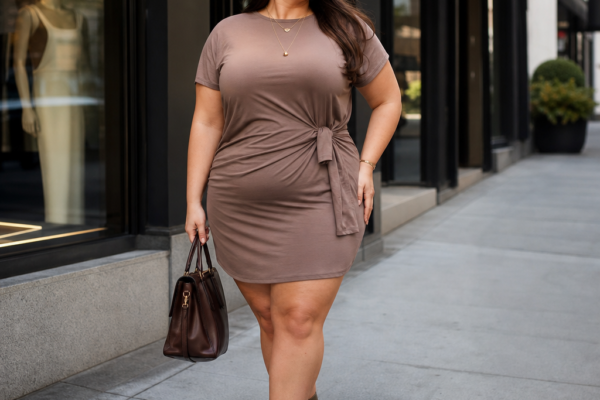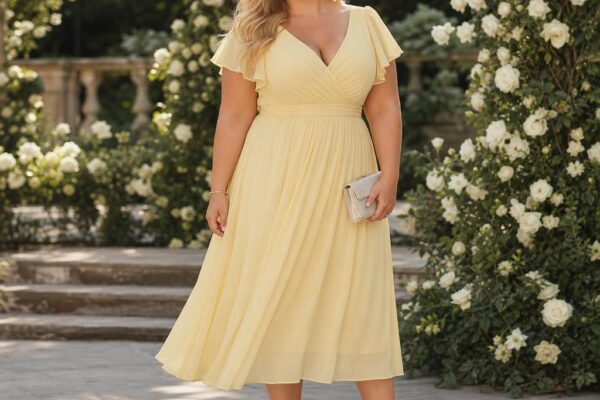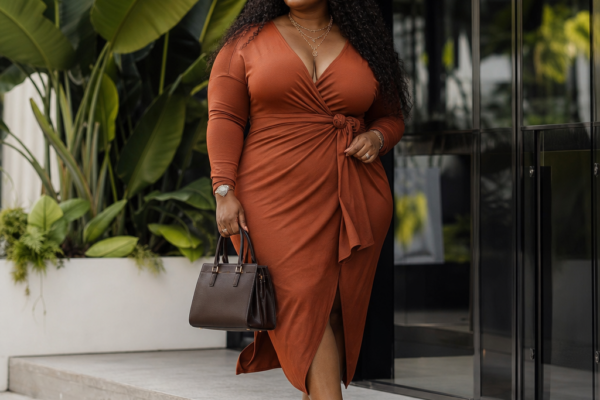
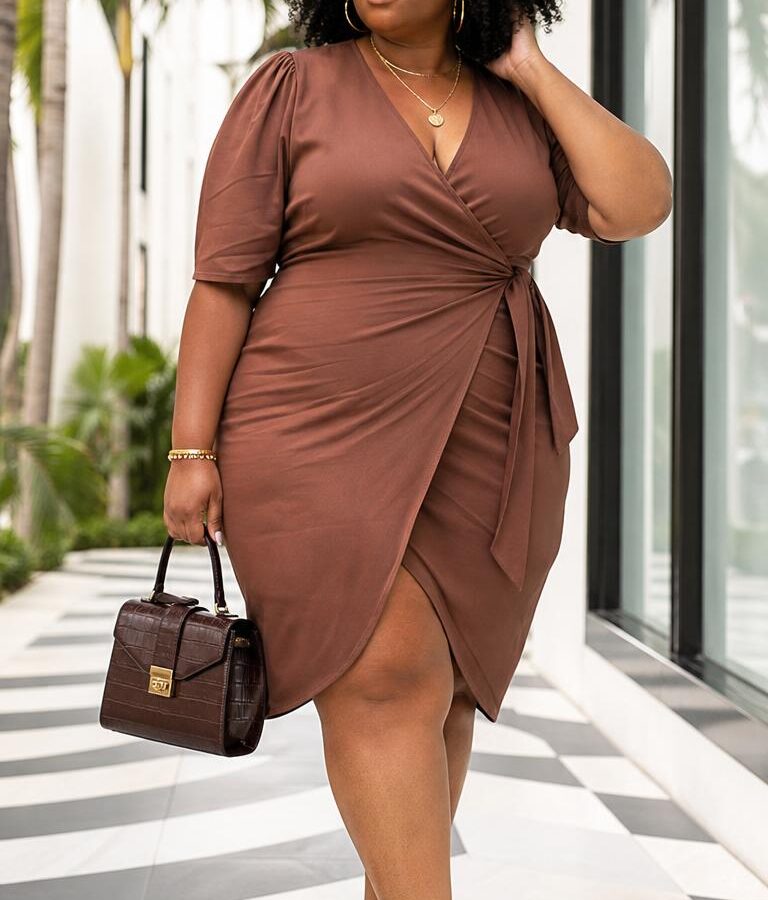
Wrap dresses are a forever favorite for a reason: they follow your shape, define the waist, and adjust with you throughout the day. If you’re curvy—fuller bust, defined waist, generous hips, or any combination—a great wrap dress can feel like it was made for you. The key is choosing the right fit details and fabric so you get that iconic wrap-dress polish without constant adjusting.
Why Wrap Dresses Flatter Curvy Figures
The magic of wrap dresses for curvy figures is in the construction:
- Adjustable waist definition: A true wrap (or well-made faux wrap) naturally draws the eye to the narrowest point of your torso. That creates a balanced, hourglass-friendly outline—without compressing you.
- Diagonal lines = instant shaping: The wrap closure forms a diagonal across the body, which visually elongates the torso and creates smooth, flattering lines over the bust and midsection.
- Customizable fit through the bust and hips: Because the wrap ties (or has internal closures), you can often fine-tune snugness where you want it—more room for curves, less fabric fighting you.
- Movement that looks intentional: Wrap dresses typically have a swishy skirt and flexible waist. On curvy bodies, that reads elegant and confident, not restrictive.
Think of wrap dresses as shape-celebrating by design: they define, drape, and move with you.
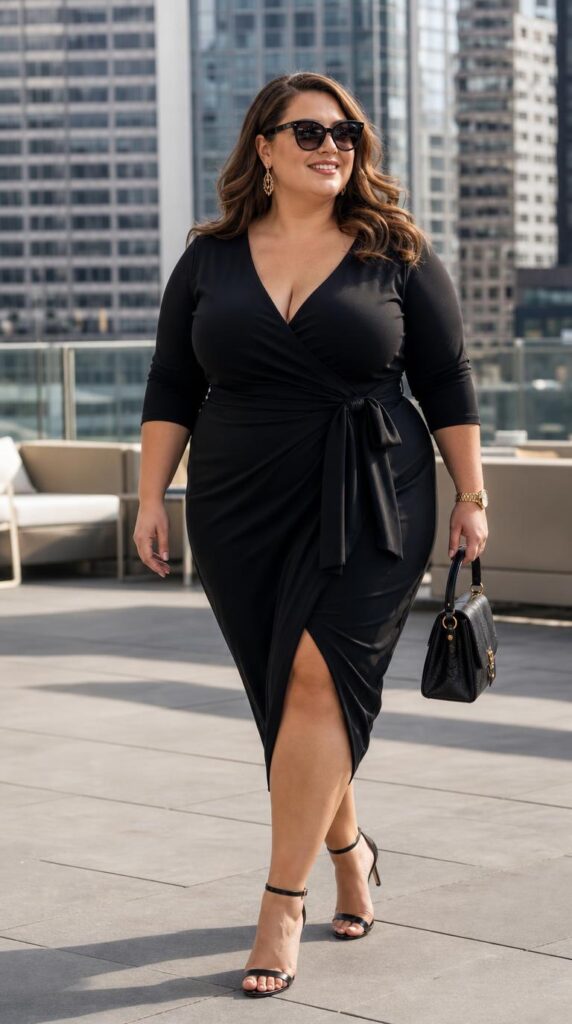
How to Choose the Right Wrap Dress Fit (Bust, Waist, Hips)
A wrap dress should feel secure and comfortable while keeping the neckline and skirt in place. Here’s how to shop smarter for your proportions.
Bust: supportive, secure, and no constant tugging
- Look for inner structure: The best wrap dresses for curvy figures often include an internal button/snap, hidden tie, or modesty panel to keep the front anchored.
- Prioritize coverage you can trust: If you’re fuller-busted, a wrap with a slightly higher center front or wider wrap panels helps prevent gapping.
- Seaming matters: Bust darts, princess seams, or a shaped bodice keep fabric from pulling across the chest (which is what causes that “open V” that won’t stay put).
Why it works: When the bust is supported by construction—not just stretch—you get a smooth fit without sacrificing the wrap silhouette.
What Should I Wear? 👗
Tell us the plan and your mood. We'll help you find your look.
Where are you headed? 💌
Pick the occasion.
What's your vibe today? ✨
No wrong answers. Go with your gut.
What's your shopping mood? 🛍️
We'll use this to guide the picks—not judge your budget.
What Does Your Skin Need Today?
A little beauty check-in to help you find your next feel-good routine. 💕
What are you in the mood for? 💗
Pick your beauty mood ✨
How much time feels right? ⏰
Your Beauty Picks 💕
A few things to explore — choose what feels right for you.
Some links may be affiliate links. If you buy through them, PlusMermaids may earn a commission at no extra cost to you.
Some links may be affiliate links. If you shop through them, PlusMermaids may earn a commission at no extra cost to you.
Waist: the tie placement is everything
- Aim for a true waist tie (not empire-only): Ties that land at or near your natural waist give the cleanest definition and the most stable fit.
- Wide ties or side ties distribute tension better: A narrow string tie can dig in or loosen over time; wider ties hold their knot and look more elevated.
- Check for enough wrap overlap: More overlap across the front means better coverage and less shifting as you move.
Why it works: A stable tie keeps the dress aligned, which keeps the neckline and skirt behaving, too.
Hips: glide, don’t cling (unless you want it to)
- Choose skirts with room to move: A-line, tulip, or gently flared wrap skirts skim beautifully over hips.
- Watch for pulling at the wrap edge: If the front panel pulls open at the thigh/hip when you walk, sizing up (or choosing more overlap) can make a big difference.
- Consider faux wraps for extra security: A faux wrap gives the same look with less risk of the skirt opening.
Why it works: When the skirt has enough sweep, you get that classic wrap drape—effortless, not fussy.
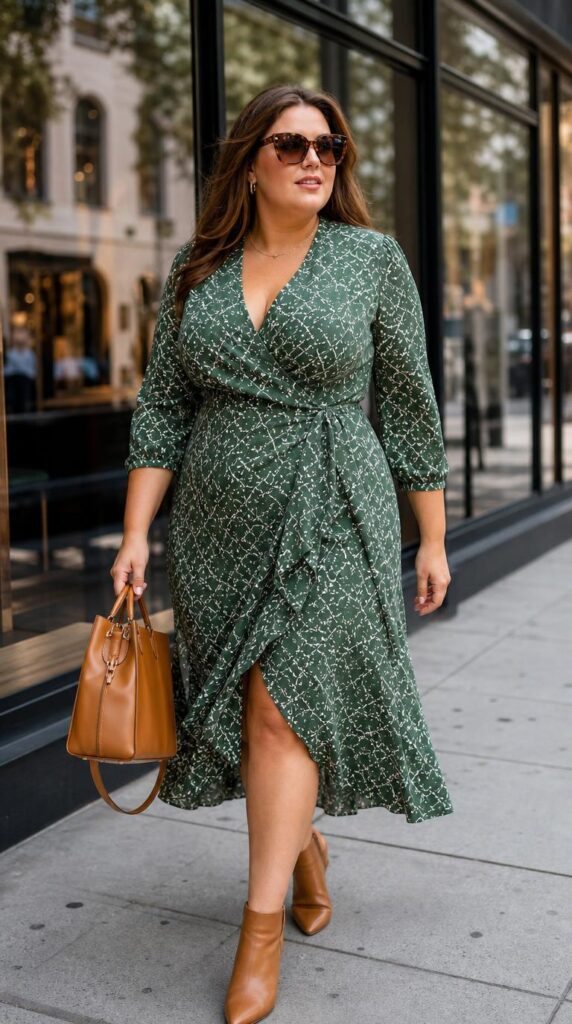
Best Fabrics and Stretch Levels for Comfort and Shape
Fabric is the difference between a wrap dress that feels “set it and forget it” and one that needs constant readjusting.
Best choices for plus-size wrap dresses
- Matte jersey (medium weight): Smooth, comfortable, forgiving, and great for day-to-night. Look for jersey that feels substantial, not thin.
- Ponte knit: More structured than jersey with excellent recovery—great if you want a more tailored look that still stretches.
- Stretch crepe or stretch woven blends: Polished and drapey, often better for workwear or events where you want a cleaner line.
- Viscose/rayon blends with a touch of elastane: Soft, breathable, and fluid—beautiful movement, especially in midi and maxi lengths.
Stretch level: what to look for
- A little stretch (2–5% elastane/spandex): Helps the wrap stay comfortable and reduces pulling at the bust and hips.
- Too much stretch can backfire: Very thin, high-stretch knits may slide, grow, or cling more than you want, especially at the neckline and tie.
- Fabric recovery is crucial: Gently stretch the fabric and see if it snaps back. Good recovery keeps the neckline and waist from getting saggy.
Why it works: Supportive drape plus reliable recovery gives you that flattering wrap shape all day—without the constant “tug and tie” routine.
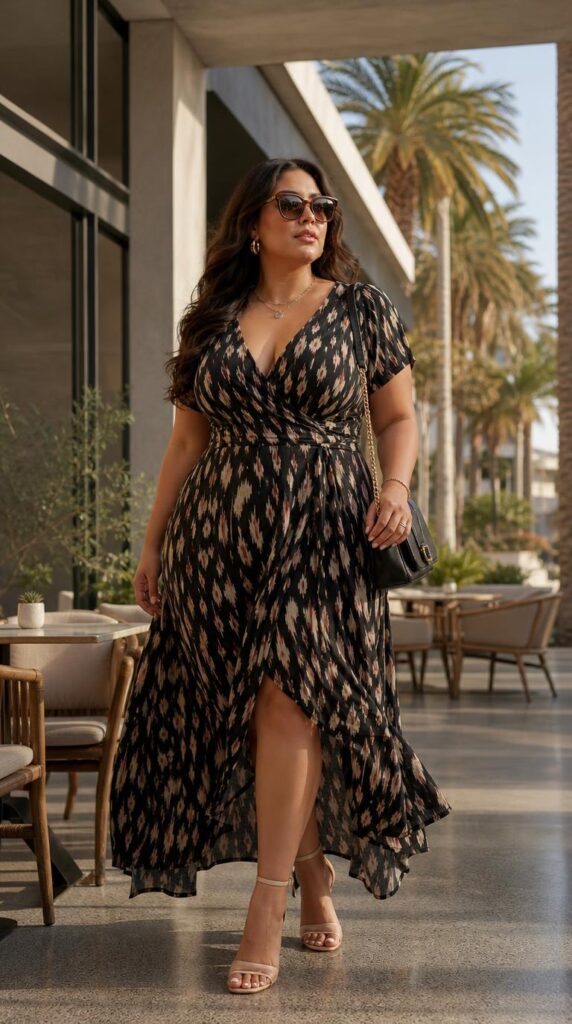
Necklines, Sleeves, and Hemlines That Balance Your Proportions
Wrap dresses come in tons of variations. These details help you tune the silhouette to your preferences and proportions.
Necklines that play well with curves
- Classic V-neck wrap: Universally flattering and elongating, especially if the V isn’t too deep for your comfort.
- Surplice with a higher bridge: Great for fuller busts—same wrap look, more coverage.
- Shawl collar wraps: Add softness and structure at the neckline; they can feel especially luxe for dressier moments.
Styling tip: If you love a deeper V but want a bit more coverage, a lace-trim cami or smooth bodysuit underneath keeps it intentional and sleek.
Sleeves that add balance (and comfort)
- Flutter sleeves: Light and pretty, balancing hips and adding movement.
- Elbow-length sleeves: A sweet spot for a polished, proportional look—especially in workwear wraps.
- Long sleeves in a drapey fabric: Elegant and elongating, particularly in midi/maxi styles.
Why it works: Sleeves create visual balance between shoulders and hips. Choose the sleeve shape that makes you feel most “you”—soft, structured, or dramatic.
Hemlines and skirt shapes
- A-line wrap skirts: The easiest, most universally flattering option—flowy, balanced, and comfortable.
- Tulip hems: Gorgeous leg line and movement, but make sure there’s enough overlap for walking.
- Ruffles: Fun and feminine; look for ruffles that follow the wrap edge (a vertical/diagonal line) rather than adding bulk straight across the widest point.
Finding the Most Flattering Wrap Dress Length for Your Height
The most flattering length is the one that complements your height and how you like to style shoes—plus how much leg you want to show.
- Petite (roughly 5’3″ and under):
- Knee length or midi with a slit tends to elongate.
- Look for wrap dresses with a higher waist tie or shorter bodice to avoid a “swallowed” feeling.
- Average height:
- Midi is a standout: it highlights the waist and lets the skirt drape beautifully over hips.
- A wrap midi with a defined waist seam reads especially balanced and polished.
- Tall:
- Midi and maxi lengths look incredible—long vertical lines plus wrap definition is a power combo.
- Choose maxis with enough sweep so the skirt doesn’t cling at the hips.
Quick hem rule: If the hem hits at a spot you don’t love, try shifting the visual with footwear (a pointed toe or nude-ish shoe tone can lengthen) or choose a hem that hits slightly above or below that point for a cleaner line.
Styling Tips: Shoes, Belts, and Layers to Define the Waist
Wrap dresses already highlight the waist—styling just helps you customize the vibe: casual, work, date night, or formal.
Shoes that complement wrap dresses for curvy figures
- Pointed-toe flats or low heels: Lengthen the leg line and look polished with midi lengths.
- Block heels: Stable, comfortable, and balanced with the movement of wrap skirts.
- Strappy sandals: Great with midi/maxi wraps—keeps the look light.
- Sneakers: Choose a sleeker silhouette for a modern casual look; pair with a cropped denim jacket or utility jacket for structure.
Why it works: Wrap dresses are fluid. Shoes with a clean shape (pointed, minimal, or structured) keep the outfit looking intentional.
Belts: when (and how) to add one
- Use a belt to change the vibe, not “fix” the fit:
If your wrap tie is thin or the knot feels bulky, a belt can streamline the waist and elevate the outfit. - Best belt types for wraps:
- Medium-width belts for a balanced, everyday look
- Stretch belts for comfort (especially for long wear)
- Obi-style belts for drama and extra waist emphasis (great for events)
Pro tip: If your wrap tie is already flattering, skip the belt and let the wrap do what it does best—clean, effortless waist definition.
Layers that work with wrap dresses
- Cropped denim jacket: Defines the waist and adds structure without interrupting proportions.
- Blazer (hip-length or slightly cropped): Creates a sharp line at the shoulders and keeps the waist visible—perfect for office styling.
- Longline cardigan: Works best when worn open so the wrap’s diagonal line and waist stay in focus.
Why it works: The wrap dress is all about that central, defined waist. Layers that end at (or highlight) the waist keep the silhouette strong.
Common Wrap Dress Fit Issues (Gapping, Slipping) and Easy Fixes
Even a great wrap can have a couple of quirks. Here’s how to keep it secure and comfortable—without overthinking it.
Issue: Neckline gapping
Fixes:
- Use fashion tape or dress tape along the neckline edge (clean, invisible, effective).
- Add a small snap or hidden stitch at the bust overlap if you want a permanent solution.
- Try a higher-coverage bra or a smooth cami/bodysuit if you prefer layered security.
Issue: Skirt opening when you walk or sit
Fixes:
- Look for styles with more overlap or choose a faux wrap.
- Add a hidden safety pin at the thigh opening (inside layer to outside layer) for special occasions.
- Consider slip shorts for comfort and confidence with shorter or breezier wraps.
Issue: Tie slipping or coming undone
Fixes:
- Double-knot the tie, or tie it in a flat bow so it stays put.
- If the tie is very thin, add a waist belt over it to keep everything anchored and elevate the look.
- Choose wraps with an inner tie + outer tie system—these tend to be the most secure.
Issue: Fabric clinging or riding up
Fixes:
- Opt for heavier jersey, ponte, or stretch crepe with better drape.
- A light slip can help the skirt glide and hang smoothly.
- Check sizing: a wrap should skim, not strain. A touch more room often improves drape immediately.
Wrap dresses for curvy figures aren’t about rules—they’re about options. The right wrap dress gives you adjustable comfort, a defined waist, and beautiful movement in one piece. Focus on secure construction, supportive fabrics, and the details that match your style, and you’ll have a go-to dress that feels as good as it looks.