
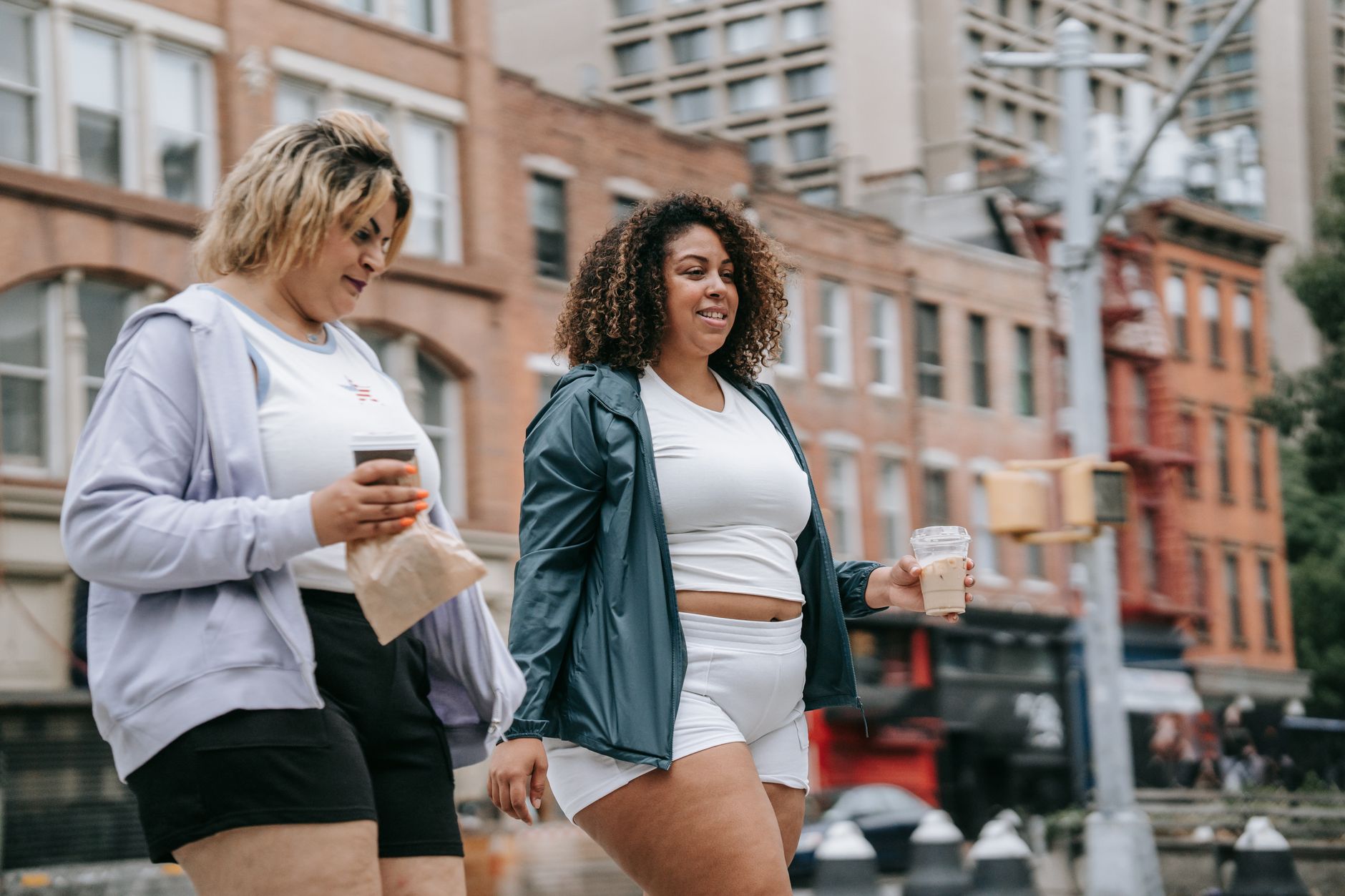
To stop comparing your body to other women, start by noticing when comparison spikes (often social media, mirrors, or specific social settings), then interrupt the thought with realistic self-talk, and choose clothes that fit and feel good right now—not “someday.”
Curating your feed and building body-respect habits can quickly reduce body comparison.
Comparison is persuasive because it pretends to be “motivation,” but it usually lands as shame—especially when you’re getting dressed. And in plus-size fashion, comparison can be extra loud: sizing inconsistency, limited in-store options, and the way mainstream style is still catching up to real bodies can all make it feel like you’re the problem (you’re not).
The goal isn’t to never notice other bodies; it’s to stop using them as a measuring stick for your own worth—and to feel confident wearing what you love.

Understand Why You Compare Your Body in the First Place
Body comparison isn’t a character flaw. It’s a learned habit, often reinforced by culture, fashion messaging, and the very normal human tendency to scan for “where do I fit in?” Understanding the why makes it easier to change the how.
What Should I Wear? 👗
Tell us the plan and your mood. We'll help you find your look.
Where are you headed? 💌
Pick the occasion.
What's your vibe today? ✨
No wrong answers. Go with your gut.
What's your shopping mood? 🛍️
We'll use this to guide the picks—not judge your budget.
Some links may be affiliate links. If you shop through them, PlusMermaids may earn a commission at no extra cost to you.
Common reasons body comparison shows up:
- You’re using someone else’s body as a shortcut for certainty. “If I look like her, I can wear that” feels safer than experimenting.
- Fashion has historically treated certain bodies as the default. When the industry centers one body type, everyone else is asked to “adapt.”
- You’re comparing a real body to a curated image. Lighting, posing, editing, and selective posting are powerful—even when you know they’re happening.
- You’re craving belonging. Sometimes comparison is less about looks and more about wanting to feel accepted in rooms that weren’t built for you.
Editor’s note: The antidote isn’t forcing yourself to “love your body” on command. It’s building body respect—a steady, realistic relationship with your body that doesn’t rise and fall based on someone else’s outfit photo.
Notice the Triggers: Social Media, Mirrors, and Certain People
If you want to stop comparing your body to other women, you need to identify the moments it’s most likely to happen. Comparison has patterns—and patterns can be edited.
Trigger 1: Social media “outfit” scrolling
This one is obvious but still sneaky. You may start looking for styling ideas and end up tallying thighs, arms, stomachs, and jawlines.
Find My Perfect Fit ♡
A little help choosing clothes that feel as good as they look.
Where are you shopping?
Choose a store to explore its sizing guidance.
What are you shopping for?
Different garments need different fit checks.
How do you like your clothes to fit?
There is no right answer—choose what feels good to you.
What size do you usually start with?
This is just a starting point—not a size prediction.
Your choices stay in this page session. We do not ask for your name or save your size answers.
Some links may be affiliate links. If you shop through them, PlusMermaids may earn a commission at no extra cost to you.
Try this:
Before you open an app, set a purpose: “I’m looking for wide-calf boot styling” or “holiday party outfit ideas.” When you get what you came for, close the app. You’re not weak for needing boundaries; the platforms are designed for infinite comparison.

Trigger 2: Mirrors—especially in harsh lighting
Some mirrors are basically emotional sabotage: overhead lighting, odd angles, and that fun carnival effect of cheap glass.
Try this:
- Evaluate outfits in one trusted mirror with consistent lighting.
- Use your phone camera at chest height (not the low-angle doom cam) if you want a more balanced view.
- Remember: fitting room lighting is not a personality test.
Trigger 3: Certain people or settings
Maybe it’s the friend who casually critiques her own body all night. Or the family member who makes comments about “being good.”
Try this:
Have a go-to phrase ready:
- “I’m not doing body talk today.”
- “Let’s not discuss weight or diets.”
- “I’m focusing on feeling good in my clothes.”
You don’t owe anyone access to your self-image.
Challenge Comparison Thoughts With More Realistic Self-Talk
Comparison thoughts feel factual because they arrive fast. The trick is not arguing with them endlessly—it’s replacing them with thoughts that are both true and useful.
Step 1: Name the thought (don’t become it)
Instead of: “My arms look bad.”
Try: “I’m having the thought that my arms look bad.”
That tiny distance helps you respond rather than spiral.
Step 2: Switch to “stylist brain”
Plus-size fashion confidence often grows when you treat getting dressed as a styling problem—not a body problem.
Instead of: “I can’t wear sleeveless like her.”
Try: “What sleeve shape or neckline makes me feel most powerful?”
Useful options to experiment with (no “hiding,” just choices):
- Cap sleeves or flutter sleeves for movement and softness
- Sleeveless with a higher armhole for a clean line and secure feel
- Square necklines to highlight collarbones and balance proportions
- Sheer sleeves or mesh layering when you want coverage without heaviness
Step 3: Use comparison-proof outfit language
When you catch yourself ranking bodies, redirect to fit and feel:
- “Does this garment fit my shoulders and bust comfortably?”
- “Do I like where the waist hits on my torso?”
- “Can I sit, move, and breathe in this?”
- “Does this look match the vibe I want today—romantic, sharp, playful, minimal?”
Confidence comes from alignment, not approval.
Curate Your Feed and Environment to Reduce Body Comparison
You don’t have to “be stronger” than your environment. Edit the environment.
Curate your feed like a fashion editor
Your style inspiration should make you feel expanded, not evaluated.
- Follow plus-size creators with your vibe. Not just “body positivity”—look for people with similar style references: streetwear, cottagecore, corporate, glam, minimal, alt.
- Diversify the bodies you see. Different heights, shapes, ages, skin textures, disabilities, and gender expressions reduce the “one right body” illusion.
- Mute freely. Muting is not a moral failing. It’s closet organization for your brain.
Pro tip: Save outfit posts based on styling elements, not bodies—e.g., “monochrome looks,” “belt styling,” “wide-leg proportions,” “statement sleeve ideas.”
Make your closet more comparison-resistant
A closet that actually fits you is a form of mental health care.
- Let go of the “maybe” pile that only exists for a smaller future body.
- Prioritize comfortable waistbands and fabrics (stretch denim, ponte, knits, cotton blends, linen blends) so your outfit doesn’t become a constant sensory reminder.
- Tailoring is not “fixing.” Hemming pants, adjusting straps, or nipping a waist is customizing a garment to your body—like getting a ring resized.
If you’re constantly tugging, pinching, or adjusting, your brain will look for someone else to blame it on. Usually, it’s the garment.
Build Body Respect With Habits That Aren’t About Appearance
Confidence sticks when it’s built on care, not constant evaluation. Body respect is about treating your body well even on days you don’t feel cute.
Try a few of these—consistency matters more than intensity:
- Wear comfortable underwear and bras that fit. A supportive bra, smoothing short (if you like), or breathable brief can change how clothes drape and how you feel in them—without changing your body.
- Choose “good sensory” fabrics. If you hate clingy synthetics, stop forcing them. If you love a heavy knit that holds shape, lean in.
- Create a getting-dressed routine you enjoy. Music, fragrance, a 5-minute steam session for a wrinkled dress—small rituals make dressing feel like self-expression, not self-judgment.
- Move in ways that feel good. Stretching, walking, dancing in your kitchen—movement can reconnect you to your body as yours, not as an object to be graded.
None of these are about earning outfits. They’re about making your daily life kinder.
Focus on What Your Body Can Do, Not Just How It Looks
A practical way to stop comparing your body to other women is to shift from appearance goals to function and experience goals—especially with fashion.
Dress for the life you’re living
Ask: “What do I need my outfit to do today?”
- For long days: breathable fabrics, supportive shoes, layers you can adjust
- For events: secure necklines, confident hemlines, fabrics that don’t require constant smoothing
- For travel: stretch, pockets, and pieces that remix easily
Build outfits around “power pieces”
A power piece is something that makes you feel like yourself, immediately—regardless of anyone else’s body.
Examples:
- A blazer with strong shoulders for polish
- A statement boot that anchors any outfit
- A bold lip + simple outfit for instant intention
- A dress in a color that lights you up (not “slimming,” just alive)
Styling technique that works on every body: create a focal point you love. Not to distract from anything—just to give your look a clear story. When your outfit has a story, your brain has less room for comparison math.
Fit check: upgrade from “Do I look okay?” to “Do I feel like me?”
Confidence isn’t always “I love every angle.” Sometimes it’s: “I’m comfortable, I’m stylish, and I’m not negotiating with my clothes all day.”
Know When to Get Extra Support for Body Image Struggles
Sometimes comparison isn’t just an annoying habit—it’s consuming. If body comparison is affecting your relationships, your ability to get dressed, your willingness to leave the house, or your mental health, it may be time for added support.
Consider reaching out to a licensed mental health professional if you notice:
- Persistent distress about your body that doesn’t ease with lifestyle changes
- Avoiding social events because of how you think you’ll look
- Compulsive checking (mirrors, photos) or constant reassurance-seeking
- Rigid food or exercise rules driven by shame
- Thoughts that feel intrusive, obsessive, or hard to control
You deserve support that goes beyond “just be confident.” Therapy (and, when appropriate, specialized support for disordered eating or body image) can help you build tools that actually work.
Stopping body comparison isn’t about becoming immune to beauty standards overnight. It’s about building a styling life—and a self-talk life—that doesn’t require you to be smaller, different, or more like someone else to feel worthy. Your body is not a trend. Your style gets to be personal, present-tense, and fully yours.
What Does Your Skin Need Today?
A little beauty check-in to help you find your next feel-good routine. 💕
What are you in the mood for? 💗
Pick your beauty mood ✨
How much time feels right? ⏰
Your Beauty Picks 💕
A few things to explore — choose what feels right for you.
Some links may be affiliate links. If you buy through them, PlusMermaids may earn a commission at no extra cost to you.


